Consumer prices rose 3.7% in the year to September, up from 3.4% in August, as increases spread beyond gasoline.
Prices rose 0.6% from August to September, the biggest monthly gain in five months, the Bureau of Labor Statistics reported on Wednesday, Oct. 14. Forecasters had expected a 3.6% yearly rise.
Gasoline jumped 9.1% in the month and drove more than half the rise. Prices also climbed for services, clothing, airfares and medical care.
October 15, 2026 · Seven stories, illustrated
All pricesup from 3.4% in August
Core pricesall but food and energy; up from 2.4% in August
Gasolineper The Guardian and Stateline
Fuel oil72% per Stateline, 74% per The Guardian
Each column is the change over the same year, drawn from 0% to scale. The fuels are inside “all consumer prices”, not added to it. Fuel oil’s two counts differ, so its column is solid to the lower one and hatched to the higher.
Core inflation, everything but food and energy and the measure of the underlying trend, rose to 2.6% a year from 2.4% in August, with a 0.3% monthly gain.
“A whole bunch of good news in the report.”Kevin Hassett, director of the National Economic Council, who called the energy surge “temporary” and pointed to flat food prices and a 1.2% drop in prescription drug prices.
Core prices, which leave out energy, ran at a 3.4% annual pace over three months, per Axios.
Market pricing reported by Axios, not a Fed forecast. A quarter-point hike would raise the Fed’s benchmark interest rate by 0.25 percentage point to slow price growth.
- +12 basis points
- The two-year Treasury yield, the interest rate on two-year federal debt, rose 0.12 percentage point after the report, per Axios.
- 17%
- of U.S. adults approve of Trump’s handling of the cost of living, per an AP-NORC poll.
- Since May
- Annual inflation is the highest since May, when it hit 4.2%. This was the last inflation report before the Nov. 3 midterms.
Still open: what the Federal Reserve does when it meets Oct. 27–28.
Read the reporting
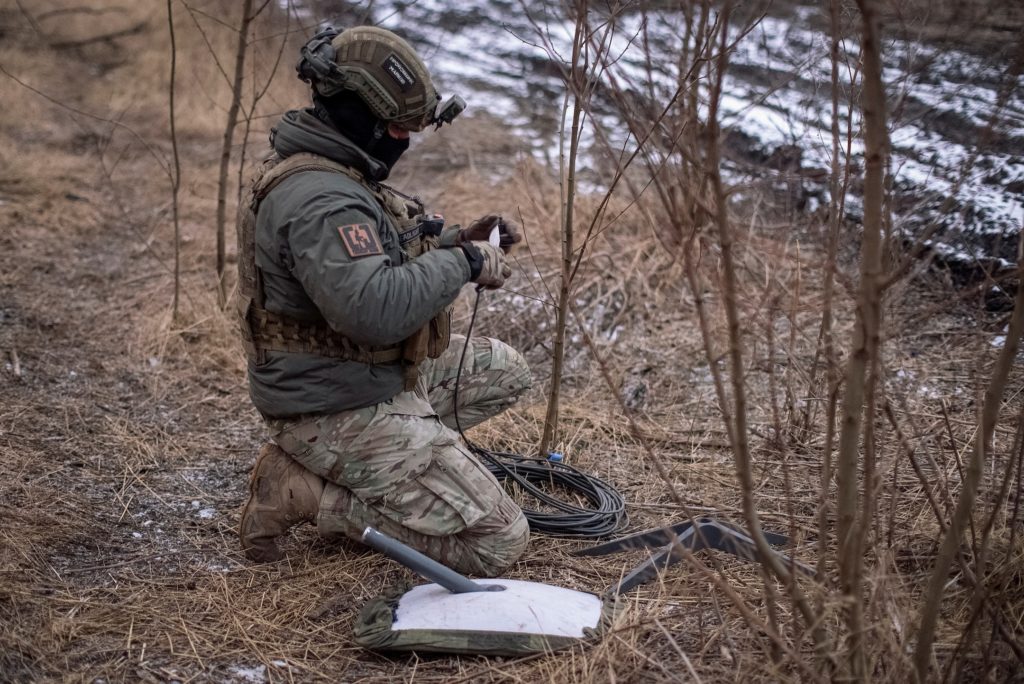
Ukraine’s military Starshield terminals stopped working above 160 km/h, and Musk says such limits are set by the U.S. military and “ultimately POTUS.”
Overnight Tuesday into Wednesday, Oct. 14, the terminals cut out on anything moving faster than about 160 km/h (100 mph). Musk did not say who approved this cap, and the cap still stood on Wednesday after a partial fix.
- What stopped
- Ukraine’s military Starshield terminals on anything moving faster.
- What it hit
- Drone missions, and air defense against jet-powered Shahed attack drones.
- Below the cap
- Service partly returned Wednesday. The cap stayed.
Starshield is SpaceX’s military-grade Starlink satellite internet, contracted for Ukraine through the U.S. government until May 15, 2027.
“The drones kept flying, but the interruptions made them harder to control.”Ukraine’s 7th Rapid Reaction Corps
Starshield is government-controlled, and limits are set by the U.S. military and “ultimately POTUS.” He did not name who approved this one.
The administration had nothing to do with it.
On the record: no one has said who ordered the cap
- Sept. 2022
Musk refused coverage for a naval-drone strike near Crimea.
- Feb. 2023
SpaceX president Gwynne Shotwell confirmed curbs on drone control.
- Early Feb. 2026
A 75–90 km/h cap aimed at Russian drones also grounded Ukrainian ones until Kyiv whitelisted its terminals. Kyiv had asked for that cap, but not this one.
- Marcy KapturDemocrat · Ohio
- Brian FitzpatrickRepublican · Pennsylvania
- Mike QuigleyDemocrat · Illinois
- Joe WilsonRepublican · South Carolina
Limits that put civilians in harm’s way “will not be accepted by Congress.”
The restrictions “must stop immediately,” and the Pentagon must tell Congress at once if it pauses or downgrades intelligence sharing.
Removing the speed limit entirely “is now critical for Ukraine’s defense.”
Still open: no one has said on the record who ordered the cap, or whether it will be lifted.
Read the reporting
The Justice Department ordered California to check the citizenship of an undisclosed list of mail voters and hold their ballots by noon Thursday, Oct. 15.
Acting Deputy Attorney General Trent McCotter sent the letters on Tuesday, Oct. 13. They do not say how many people are on the list or how DOJ picked them, and Los Angeles County has not opened the thumb drive that came with them.
From Acting Deputy Attorney General Trent McCotterTuesday, Oct. 13
To California Secretary of State Shirley Weber and Los Angeles County Registrar Dean Logan
- 01Check each person’s citizenship.
- 02“Segregate — not cancel” returned ballots that can’t be verified.
- 03Hold back ballots not yet mailed.
Due by noon Thursday, Oct. 15
Enclosed: a password-protected thumb drive
It lists people DOJ calls likely noncitizens who were sent mail ballots.
- How many people
- Not stated
- How DOJ picked them
- Not stated
- Opened by Los Angeles County
- Not yet
Otherwise: “the United States will have no choice but to seek emergency relief” in court
California began mailing ballots to every registered voter on Oct. 5.
His office does “not consider the device a secure medium.” Removing a voter “must be based on verifiable information, not assertions of unconfirmed data matching.”
The fraud claims are “a lie” and “a conspiracy theory.”
- 26 of 31
- voter-roll suits against states its Civil Rights Division has lost.
- 50 of about 90
- people DOJ charged with election crimes this year are accused of voting as noncitizens.
- 41
- such voters found by North Carolina’s 2016 audit, compared with nearly 4.8 million voters in all.
- 16
- ballots flagged by Michigan’s 2024 review, compared with more than 5.7 million ballots in all.
Proven noncitizen voting is rare where it has been counted. These counts come from other states and years; they do not show how many people are on California’s list, which DOJ has not disclosed.
Federal law bars systematic voter-removal programs in the 90 days before a federal election. In a 2024 Virginia case, DOJ itself told a court that individual investigations are allowed. Mass database matching, it said, is not.
Still open: how many people are on the list, and how DOJ picked them.
Read the reporting

Agents seized Rep. Ilhan Omar’s phone in the search of her home, and a Minnesota grand jury has subpoenaed her relatives.
Investigators took the phone during the Monday, Oct. 12 search of her Washington home. A federal grand jury in Minnesota has issued more than a dozen subpoenas, including to her relatives; NBC counts about a dozen. Omar herself was not subpoenaed.
Omar has not been charged. Investigators are examining whether her age and her family’s immigration filings were falsified.
- Friday, Oct. 9CBS and NBC say
the subpoenas went out, before the search.
- Monday, Oct. 12The search
Agents search her Washington home and take her phone.
- Tuesday, Oct. 13TIME says
the subpoenas went out, after it.
The outlets disagree; the date is not settled
19811982
Her staff asked the library to change her listed birth year.
NBC News and Fox News report that Omar became a U.S. citizen at 17 through her father’s naturalization: derivative citizenship, which passes a parent’s new citizenship to a child. That makes her real birth year central to the case.
TIME reports the probe points toward denaturalization, a court case to strip someone’s citizenship.
“My wife came here when she was 12 years old as a child war refugee. No concerns.”Tim Mynett, her husband
- Manual 9-27.260
- Bars choosing any step, or its timing, to help or hurt a candidate or party.
- Manual 9-85.500
- Requires consulting Public Integrity when an action could raise that issue, or look like it does.
- The 60-day pause
- Unwritten practice, described in the inspector general’s 2018 review of the 2016 election.
CBS reports that DOJ’s Public Integrity Section, the unit that reviews politically sensitive cases, was consulted before the search. The section is down to two attorneys.
Norm Eisen of the Democracy Defenders Fund said: “Staging a public raid on the home of a sitting member of Congress weeks before a consequential election is an abuse of power.”
U.S. Attorney Jeanine Pirro has also opened a review of Omar’s financial disclosures; the figures in them for her husband’s two businesses are per Fox News, and the October 14 edition drew them. Trump said he takes “no position” on deporting her.
Still open: when the subpoenas went out. CBS and NBC put it before the search; TIME puts it after.
Read the reporting

Social Security will raise benefits 3.6% in 2027, its largest yearly increase since 2023.
The Social Security Administration set the 2027 cost-of-living adjustment, the yearly raise tied to inflation, on Wednesday, Oct. 14. The average retiree gets about $75 more a month starting in January.
Cost-of-living adjustment · 2027Set Wednesday, Oct. 14
3.6%this year’s raise was 2.8%
- More a month, from January
- about $75
- More a year
- about $900
- Medicare Part B premium, usually deducted from the check: $202.90 a month in 2026, $209.50 for 2027 trustees’ projection
- eats $6.60 of the $75
People on Supplemental Security Income, federal cash aid for low-income elderly and disabled people, get theirs earlier, on Dec. 31, 2026.
- 8.7%January 2023
- 5.9%January 2022
- 5.8%January 2009
Five of the 27 January raises since 2000 hit 3.6% or more; the median was 2.5%.
- 0.9 percentage points
- The raise came in that far above the Social Security trustees’ projection.
- $192,300
- Workers pay more too: the most income subject to Social Security tax rises to that in 2027, from $184,500.
- 22% cut
- in checks if the retirement trust fund runs dry in late 2032, as projected.
Read the reporting
The Singapore-flagged container ship GFS Pride sank in the Strait of Hormuz, and Singapore and Iran give different accounts of what hit it.
The ship caught fire and sank after a strike on Tuesday, Oct. 13. All 21 crew were evacuated unhurt. Singapore says projectiles hit it; Iran says mines.
Its Maritime and Port Authority said the ship was “reportedly struck by unknown projectiles.” It named no attacker and released no impact analysis.
The Revolutionary Guards said the ship hit naval mines while sailing an “unauthorised” route. Their photos show the fire, the sinking and floating containers, not the weapon.
No investigator, including Singapore’s flag-state authorities, has published a finding on what sank the ship.
- GFS Pride · Tuesday, Oct. 13Struck, caught fire and sank. All 21 crew were evacuated unhurt.
- GFS Giselle · Wednesday, Oct. 14Hit, and reached safe anchorage with its 22 crew.
confirmed attacks on merchant ships since the Iran war began in February. At least 24 seafarers have been killed in them.
- What shipowners want
- The main lanes cleared of mines, then a clear government declaration that they are safe.
- What they have
- U.S. forces said Aug. 28 they had cleared the main lanes. Iran never endorsed that, and the tanker owners’ group INTERTANKO called it necessary but not enough.
The Strait of Hormuz is the narrow sea passage between Iran and Oman. Before the war, 21 million barrels of oil a day moved through it (Kpler). IMF PortWatch counted an average of 4.1 ship crossings a day in the week to Oct. 11, against 58.5 a day in January.
On Oct. 11, a joint naval advisory, a security notice issued to ships in the area, logged Iranian radio orders telling ships to leave the southern lane near Oman and move north into Iranian waters. It still rated the threat “severe.”
Still open: what sank the ship. No investigator has published a finding.
Read the reporting
DHS accepted six of seven GAO fixes for its body-camera programs but refused cameras that start recording on their own for ICE.
The Government Accountability Office, Congress’s watchdog, reviewed the body-camera programs at Customs and Border Protection and Immigration and Customs Enforcement. It found outdated plans and unclear rules on when to record.
accepted. The reporting does not list them one by one.
rejected: body cameras that turn on automatically for ICE. DHS cited operational risks. According to GAO, it offered no other safeguard to make sure officers capture required footage.
GAO calls the refused fix automatic activation: the camera starts recording without waiting for an officer to press a button. Today the officer decides, and the rules are unclear.
- 6 of 10 sites
- it reviewed had staff unsure when cameras had to be on.
- Plans out of date
- ICE has not updated its program plan since 2024, and CBP has not updated its plan since 2022.
- Cameras in use
- ICE had about 4,800 as of April 2026. CBP had about 11,500 as of June 2026.